Understanding Tolerance in CNC Machining Practices Across NC
The Importance of Tolerance in CNC Machining
What is Tolerance in CNC Machining?
Tolerance in CNC machining refers to the permissible limits of variation in the dimensions of a machined part. It defines how much a part's north carolina cnc machining actual size can deviate from its specified dimensions. This concept is crucial in CNC machining as it directly impacts the functionality, interchangeability, and overall quality of the finished product. Tolerances can be tight or loose, depending on the requirements of the project, and are specified in manufacturing drawings to ensure clarity between designers and machinists. Understanding tolerance is essential for any CNC machinist, as it guides the machining process, selection of tools, and adjustment of CNC machines to achieve the desired precision.
Why Tolerance Matters in CNC Machining Practices
Tolerance plays a significant role in CNC machining practices for several reasons. First, it affects the overall quality and performance of the machined components. Tight tolerances can enhance the reliability of parts used in critical applications, such as aerospace or medical devices, where even minor deviations can result in catastrophic failures. Second, establishing appropriate tolerances helps reduce waste and rework, which can save time and costs in production. Lastly, understanding and applying the correct tolerances promotes better communication between engineers and CNC machinists, ensuring that all parties involved have a clear understanding of the project requirements. Thus, tolerance is not merely a technical specification but a fundamental aspect of effective CNC machining.
Common Tolerance Standards in CNC Machining
Several tolerance standards govern CNC NC cnc milling machining practices. Among the most widely recognized standards are the ISO (International Organization for Standardization) and ASME (American Society of Mechanical Engineers) standards. ISO 2768, for example, outlines general tolerances for linear dimensions, angular dimensions, and geometrical tolerances. ASME Y14.5 provides a detailed framework for geometric dimensioning and tolerancing (GD&T), which helps machinists understand how to interpret the functional requirements of parts accurately. Adhering to these standards not only ensures compliance with industry practices but also enhances the quality and reliability of CNC machined components across various sectors, including metal fabrication, automotive, and aerospace industries.
CNC Machining Practices in North Carolina
Overview of CNC Machine Shops in North Carolina
North Carolina boasts a thriving network of CNC machine shops that cater to diverse industries. From small, family-owned operations in towns like Concord to larger facilities in Raleigh, these shops provide a range of services, including CNC milling, CNC turning, and custom fabrication. The state’s rich history in manufacturing and its skilled workforce contribute to its status as a hub for CNC machining. Many local shops invest in state-of-the-art CNC machines to stay competitive, ensuring they can meet the growing demands for precision machining. The combination of experience and advanced technology positions North Carolina as a leader in the CNC machining landscape.
State-of-the-Art CNC Machines in NC
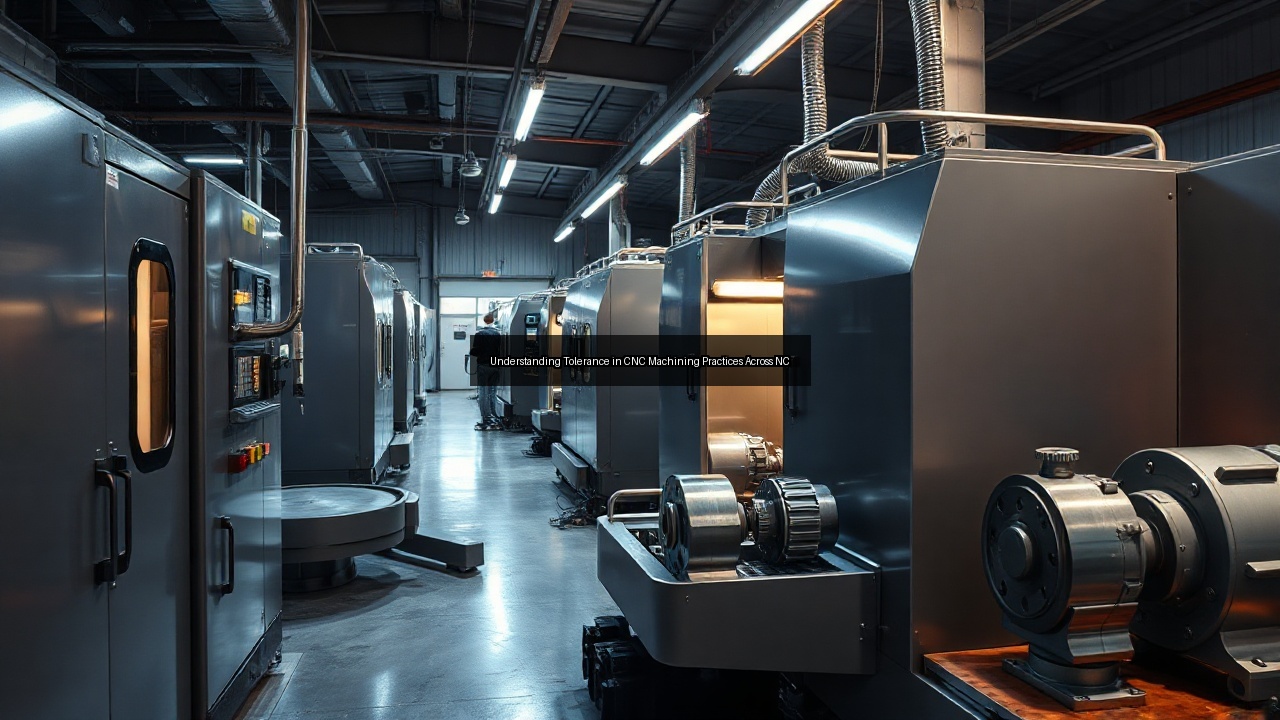
North Carolina’s CNC machine shops utilize state-of-the-art CNC machines equipped with the latest technology. These machines include CNC mills, CNC lathes, and NC cnc machine multi-axis machining centers that enhance the precision and efficiency of manufacturing processes. Advanced features such as automated tool changers, high-speed spindles, and integrated software for simulation and programming streamline operations and reduce production times. The adoption of these cutting-edge CNC machines allows local shops to handle complex designs and tight tolerances more effectively. As industries continue to evolve, the investment in state-of-the-art technology ensures that North Carolina remains at the forefront of CNC machining innovation.
Local CNC Machinists: Skills and Expertise
The success of CNC machining practices in North Carolina relies heavily on the skills and expertise of local CNC machinists. These professionals possess a deep understanding of machining principles, tooling, and materials, allowing them to produce high-quality components with precision. Many machinists undergo rigorous training and certification programs to hone their skills. Additionally, ongoing education and workshops help them stay updated on new technologies and techniques in the field. The craftsmanship of these machinists, combined with modern CNC machines, enables shops to tackle challenging projects, including those that involve intricate designs or tough materials like titanium and specialized alloys.
Applications of CNC Machining Across Industries
CNC Milling and Turning in North Carolina
CNC milling and turning are two of the most common applications of CNC machining practiced in North Carolina. CNC milling involves removing material from a workpiece using rotating cutting tools to achieve desired shapes and features. This process is essential for creating complex parts with tight tolerances. On the other hand, CNC turning involves rotating the workpiece against a stationary cutting tool to produce cylindrical shapes. Both processes are widely used in various industries, including automotive, aerospace, and medical. The versatility of CNC machining allows manufacturers to produce everything from simple components to intricate assemblies, making it a crucial element in North Carolina's manufacturing ecosystem.
Metal Fabrication: Working with Alloys and Titanium
Metal fabrication in North Carolina frequently involves specialized materials such as alloys and titanium. CNC machining techniques play a vital role in shaping these materials, which often require precise handling due to their unique properties. Alloys provide enhanced strength and durability, making them ideal for high-performance applications. Titanium, known for its lightweight and corrosion-resistant characteristics, is increasingly used in industries such as aerospace and medical implants. CNC machinists in North Carolina have developed expertise in working with these advanced materials, ensuring they can meet the industry's demands for quality and precision. This specialization contributes to the state’s reputation as a leader in metal fabrication.
Case Studies of Precision CNC Machining in NC
Numerous case studies highlight the effectiveness of precision CNC machining in North Carolina. For instance, a local CNC machine shop successfully produced components for an aerospace client that required tight tolerances and complex geometries. Utilizing advanced CNC milling technology, the machinists achieved the required specifications, resulting in a highly satisfied customer and a long-term partnership. Another case involved creating custom medical device parts from titanium, where the machinist’s knowledge of tolerances and machining techniques ensured the components met stringent regulatory standards. These case studies illustrate the significant role that precision CNC machining plays across various sectors in North Carolina, showcasing the capabilities of local shops and their commitment to quality.
Future Trends in CNC Machining and Tolerance
Innovations in CNC Technology
The future of CNC machining lies in continuous innovations that enhance productivity and precision. Emerging technologies such as additive manufacturing and hybrid machining processes are reshaping traditional CNC practices. Additive manufacturing, or 3D printing, allows for rapid prototyping and the creation of complex geometries that were previously difficult to achieve with conventional methods. Hybrid machines combine traditional CNC machining with additive processes, providing versatility in production. Furthermore, advancements in artificial intelligence and machine learning are improving the programming and operation of CNC machines, leading to more efficient and accurate machining processes. These innovations will shape the future landscape of CNC machining across North Carolina and beyond.
The Role of Tolerance in Advancing CNC Machining Practices
Tolerance remains a critical component in advancing CNC machining practices. As industries demand higher precision and quality, the ability to consistently achieve tight tolerances will differentiate successful machining operations. Enhanced measurement technologies, such as laser scanning and coordinate measuring machines (CMM), provide machinists with the tools needed to monitor and control tolerances accurately. These technologies enable real-time adjustments during machining processes, minimizing errors and reducing rework. As the industry evolves, the commitment to achieving strict tolerances will foster greater innovation in machining techniques and applications, solidifying the importance of tolerance in CNC machining.
Sustainability and Efficiency in CNC Machining
Sustainability is becoming an increasingly important focus in CNC machining practices. Manufacturers in North Carolina are exploring ways to reduce waste, conserve energy, and utilize eco-friendly materials. Implementing lean manufacturing principles can lead to more efficient processes, minimizing excess material usage and maximizing productivity. Additionally, CNC machine shops are looking at recycling metal scraps and implementing energy-efficient machines to lower their carbon footprint. As the industry shifts towards more sustainable practices, the focus on efficiency and environmental responsibility will shape the future of CNC machining in North Carolina, ensuring that it meets the demands of both customers and the planet.